
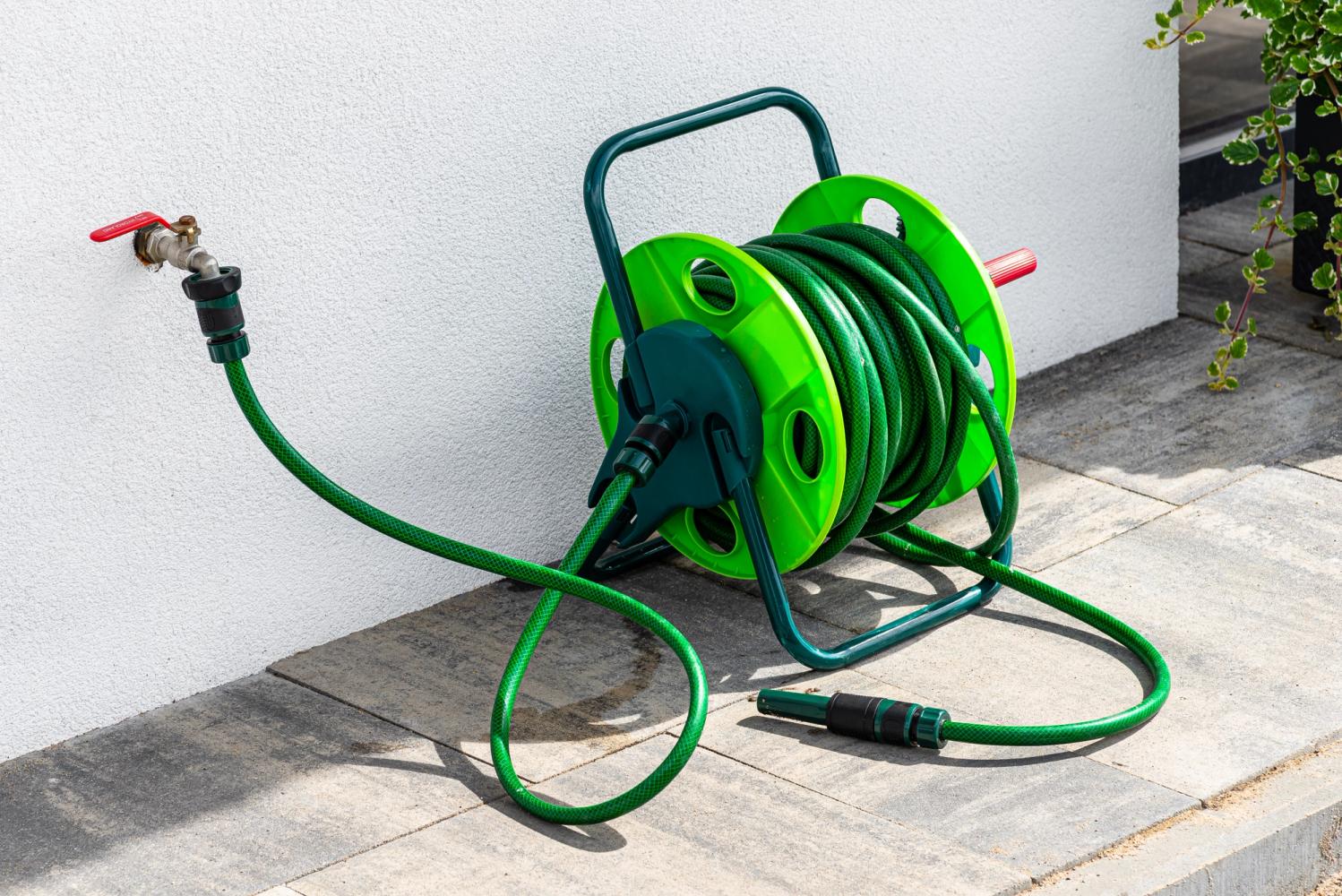
With immediate effect, we’ve introduced hosepipe restrictions across our supply area in Kent.
Due to sustained high temperatures and near record levels of demand for treated drinking water across Kent, we have made the difficult but necessary decision to introduce a Temporary Use Ban (hosepipe restrictions) for customers in our Kent region.
Below are a host of frequently asked questions and the answers to help you understand the restrictions.
If you’d like more information on what we’re doing and exemptions that apply, please click the button below.
General questions
We announced the temporary use ban for customers in Kent on 25 June 2026 and it will be enforceable from 00:01 on 3 July 2026. The temporary use ban will apply to customers in our Kent supply area only.
We have:
- Published a notice in London Gazette, Kent Messenger and Kentish Gazette
- Promoted messaging via our social media channels – Facebook, Instagram, X and LinkedIn
- Emailed our customers with information and a link to our website who are subject to restrictions
- Emailed or sent a letter to customers who are exempt
- Written to relevant MPs and councillors representing the communities we serve
- Briefed our staff about the ban so they can let customers who contact us know
- Updated our dedicated webpage hosting useful information for customers and other water users
- Let the media organisations know
A temporary ban is necessary because:
- As of 25 June 2026, the South East is in the midst of the second heatwave of the year, after having experienced just 36 per cent of normal rainfall from March to May.
- Whilst the wetter winter months meant that the company’s untreated (raw) water levels are still in a good position, it is the capacity to treat and pump this water that has prompted this move.
- High temperatures experienced in recent weeks has seen customer demand for treated water reach near record levels.
- With demand breaching the triggers in the company’s approved Drought Plan, the company is taking this action to ensure that all customers remain in supply during this period and throughout the summer.
- In preparation for this, every available water treatment works and source is currently producing treated water at full capacity and we ensured that drinking water storage tanks were filled as much as possible before the heatwave started.
- We’ve increased the number of teams fixing bursts and leaks to save water and are re-routing water around the network to where it’s needed most.
- Recent infrastructure upgrades in West Kent have successfully strengthened the Tunbridge Wells and Tonbridge networks against a repeat of last winter's interruptions. The impact of this summer heatwave is affecting drinking water storage levels right across Kent, requiring a county wide approach to restrictions.
- Despite producing up to more than an additional 100 million litres of water a day—equivalent to supplying in the region of three towns the size of Maidstone—the demand for drinking water needs to be reduced to ensure that supply interruptions are not experienced across the network throughout the summer.
The temporary use ban applies to all customers across our Kent supply area. We’re asking everyone across the county to please follow these restrictions straight away, to help us protect local water supplies. These restrictions will be enforced from 00:01 on Friday, 3 July 2026.
It is not being implemented in our supply areas in Sussex, Surrey, Berkshire or Hampshire, however we continue to monitor the situation closely in those areas.
If you live in Kent and are not sure if we supply your drinking water, you can find this out by simply entering your postcode here(opens in a new tab).
Some exemptions to the temporary use ban do exist, and details of those can be found on our website.
There are quite a few exemptions, please see more here(opens in a new tab).
We will continue to monitor the situation and should the status of any of these groups change, we will communicate directly with those affected customers.
As part of the Water Industry Act (1991), when putting a Temporary Use Ban in place we must provide our customers and stakeholders notice and offer a period of consultation for feedback. This has determined the timeline we have adopted.
It will likely continue until we are confident that water demand has reduced to manageable levels and there is no further risk of supply interruptions across the network throughout the summer.
We will keep the position under constant review.
We will:
- Publish a notice in newspapers
- Promote messaging via our social media channels – Facebook, Instagram, X and LinkedIn
- Email our customers
- Write to relevant MPs and councillors representing the communities we serve
- Brief our staff about lifting the ban so they can let customers who contact us know
- Update our dedicated webpage
- Let the media organisations know
The combination of factors already experienced so far are extraordinary, and in line with those experienced in Summer 2023. We have been communicating directly with our customers in affected areas to ask for voluntary restraint, but despite this have seen record amounts of treated water being demanded across our network. In June, the average amount of water entering our network on a daily basis is 588 million litres of water a day (ML/D). This peaked at 687 ML/D on Wednesday 24 June 2026 and has consistently stayed within our red alert level.
We are seeing the impact of accelerated climate change, with hotter and drier summers which is increasing the demand for drinking water in the south east. In the company’s business plan, enhanced after a successful appeal to the Competition and Markets Authority (CMA), there is significant investment into enhancing resilience in the county’s water supply network in the short, medium and longer term.
The company’s brand new water treatment works in Maidstone will officially be opened in a few weeks’ time, whilst additional pipes will be installed across the county to help move water around more easily. This will be supported with additional drinking water storage to provide a buffer against increases in demand. In the long term, the company is developing a new surface reservoir at Broad Oak near Canterbury. We expect these changes, once implemented, will reduce the risk of temporary use bans in the future.
The hosepipe restrictions in 2025 were in place due to dry weather impacting untreated (raw water levels) and high demand during the summer. It was lifted in February and since then we've been focussed on our accelerated six-month programme of operational changes and engineering works that include:
- Improving water pipe and network connections, to maximise the flow of available water in the network from local drinking water storage tanks
- Reviewing the performance of Water Treatment Works and accelerating technical upgrades that were previously scheduled later in South East Water’s resilience programme
- Fast-tracking the investment installation of batteries at key sites to mitigate the impact of any power blips, particularly when hot weather or high demand periods drive power surges
- Installing additional temporary drinking water storage tanks at critical sites to provide additional treated water storage, increasing the volume of water available.
We are doing everything we can to keep up with the demand for water. We are moving water around our network to help transfer from areas with more water to those with less. We are focussed on ensuring our water treatment works continue to work well and our technicians are working around the clock to treat as much water as possible overnight so we are ready each morning. If everyone helps just by avoiding using hosepipes and sprinklers until further notice we will be in a good position.
We are seeing a change in the climate and the way that customers use water. Some of the key themes that have influenced the decision to restrict the use of hosepipes include:
Unprecedented Demand: A sustained heatwave following a dry spring (March to May saw just 36% of normal rainfall) has pushed demand to record levels.
Infrastructure at capacity: We have produced up to more than 100 million litres of additional water a day—equivalent to supplying three towns the size of Maidstone. Every available treatment works is operating at maximum capacity.
Storage Depletion: Water is currently being drawn from regional storage tanks faster than it can physically be treated and refilled.
Geographic Scope: While recent infrastructure upgrades in West Kent have successfully strengthened the Tunbridge Wells and Tonbridge networks, this heatwave is impacting storage levels county-wide, requiring a blanket approach across Kent.
Unfortunately this is a myth, and whilst it might feel like it is rainy here in England, it’s simply not. The south east is described by the Environment Agency as “seriously water-stressed,” which means all the available places for us to take water from the environment in our region are already in use.
Over the last year we have repaired over 21,000 leaks on our network—compared with 18,200 in the previous years whilst repairing over 6,000 customer-side leaks.
Leaks are fixed on a priority basis according to a number of factors including the risk to health and safety and the amount of water running to waste, and where it’s going (gushing into the road or running directly into a drain). This means there may be another leak close by that needs more urgent attention; we endeavour to fix 90 per cent of leaks within 48 hours of them being reported.
We have more staff than ever finding and fixing leaks. In total, we have 400 people working on repairing leaks when they are reported, with a further 101 technicians searching for and finding leaks proactively. That’s more people out finding and fixing leaks than ever before.
All of our operational teams contribute to the repair of leaks. Our Customer Services team who record reports of leakage from our customers and the general public, the Technicians who find leaks and investigate leak reports, the work schedulers who ensure we respond asap and the repair gangs who undertake the excavation and fixing of leaks. There is a vast number of people across the company who work, each and every day, on finding and fixing leaks.
We have invested in new leak detection technology, and invested in systems to improve the visibility of our pipeline network, digitising processes to increase efficiency and reduce the need for manual work. For example we use satellite surveys and drones to pinpoint leaks and specialised noise equipment to confirm the location of a leak between two points.
To make sure we continue to beat and improve our leakage targets we'll be investing millions over the next two years and have ambitious plans to reduce leakage.
There are many different ways of finding leaks. There are those reported to us by our customers, those we find by known and trusted methods such as ‘sounding’ (listening for ‘noise’ on pipes) those we find through the use of technology (correlators, meters) and those we find by monitoring and reviewing information from our systems which inform us of areas where water use is higher than we would expect.
We’re always looking at innovative ideas to identify and repair leaks, and are trialling the use of Smart networks, satellite technology and Hive leak alerts to help us detect leaks quicker.
As a company we plan what water resources are available long into the future, and published our Water Resources Management Plan in 2024, which details the actions we’ll take in the short term, and predicts the trends across the region until 2075. As part of this current plan, we will be building a new reservoir at Broad Oak, Canterbury which will be operational by the late 2030s.
At this stage we are granting concessions to businesses that could be impacted by a temporary use ban as they use hoses as a core part of the commercial operations, such as car washes and window cleaners.
For essential water quality reasons a very small amount of the yearly average, 543 million litres we supply, each and every day, gets used for flushing broken mains and leaks that we fix on the 9,000 miles of pipe network. We also use small amounts of water in the laying and commissioning of new water mains and the ‘flushing’ of pipework to help improve the quality of the water supplied to our customers.
Yes — we are meeting regularly with other companies, who are also seeing high demand in their areas.
Bills and Rebates
The temporary ban will apply to all household users that are billed by South East Water and in the South East Water supply area of Kent. This includes customers of Last Mile Water, Leaf Water and Independent Water Networks (IWNL).
We’re sorry, we know a price rise is never welcome, especially alongside other cost of living increases. To make sure we continue to invest in making your drinking water supply more reliable by reducing leaks and improving our network, we needed to increase investment and therefore prices.
The increase will mean we can invest £2.1bn over the next five years with goals to reduce customer supply interruptions, strengthen network resilience and improve customer service.
With the ongoing high temperatures, we’re all using far more water than usual at home, meaning that we’re pumping much more drinking water to customer taps than normal.
As of 25 June 2026, the South East is in the midst of the second heatwave of the year, after having experienced just 36 per cent of normal rainfall from March to May. Demand for water increased to the highest levels we have seen between 2022 and 2026, reaching 687 million litres on 24 June 2026. This is nearly 100 million litres of water a day more than the average for June.
Despite asking for customers' help to use water for essential purposes only, regrettably we’ve now been left with no choice but to introduce this temporary use ban restriction to protect customers supplies and the environment across Kent.
No. If you are a metered customer, you are charged for your usage based on how much you have used. If you would have used a hosepipe during this period normally then you would have been paying for that usage as an additional volumetric charge which you will not have used.
If you are an unmetered customer, you are most likely to be a lower user of water as we cannot install a meter at your property. You are charged on an assessed basis of average use rather than your individual use. Therefore, no adjustments will be made to your bills.
We are in exceptional circumstances due to the high temperatures and unprecedented levels of demand. We really need to ask every one of our customers to do as much as they can to reduce the amount of water they use. Your bill pays for the provision of clean safe water. We are not asking you to stop using water, but to only use it for essential purposes to avoid waste.
Being on a meter puts you in the valuable position that any water saving you make will mean that you will save money on your bills. We are asking our customers to be conscious of the water that may be wasted on a daily basis, for example, leaving the tap running while cleaning your teeth. The more you save, the more you should notice a difference in the bills you receive.
We are in exceptional circumstances due to the high temperatures and unprecedented levels of demand. Demand for water is very high and we are now at the point where we really need to ask every one of our customers to do as much as they can to reduce the amount of water they use. Your bill pays for the provision of clean safe water. We are not asking you to stop using water, but to only use it for essential purposes to avoid waste. As you are using your water, then you are liable to pay for it. If you choose not to pay your bill at all, we will unfortunately continue with our debt recovery process.
Am I affected if...?
Yes. The restrictions apply to all customers supplied by us, in Kent.
There are some exemptions, which you can find here(opens in a new tab).
To find out if you are supplied by us, check here(opens in a new tab).
If you are on our Priority Service Register and cannot make adjustments under the restrictions, such as using a watering can instead of the hose, then you are exempt. This applies to your own domestic property and in an allotment for which you are the registered tenant.
You should have received a letter or email from us to tell you that you are exempt. If you didn’t or you want to check your status, please contact us on 0800 952 4000(opens in a new tab).
Although exempt we would ask if you can wait until cooler weather and demand for water reduces for any water use that isn’t really necessary that would really help.
If you’re not on the Priority Services Register, but think you need to be, you can register here.
Only customers who are on our Priority Service Register and cannot make adjustments under the restrictions, such as using a watering can instead of the hose, are exempt.
You can sign up to our Priority Services Register here.
We will review individual situations on a case-by-case basis. You will need to provide a letter from your Doctor as evidence of needing to use the hosepipe for medical reasons before we can grant any exemptions. If you have this, please contact us to ask for a review.
We will review individual situations on a case-by-case basis. You will need to provide a letter from your Vet as evidence of needing to use the hosepipe for medical reasons before we can grant any exemptions. If you have this, please contact us to ask for a review.
All properties supplied by us in Kent are restricted unless exempt.
You can be exempt if you cannot make adjustments under the restrictions, such as using a watering can instead of the hose.
Individuals who meet the exemption criteria, can apply for an exemption even if they are supplied by a bulk supply.
The exemption would cover the resident(s) who meet the exemption criteria only.
To apply for an exemption, please call us on 0300 000 0001(opens in a new tab) to speak to our customer service team.
You are unable to apply for an exemption online if you are not the account holder of the bulk supply.
Outside
You may water your garden with tap water by hand, using a bucket, or with a watering can. You may also water your garden using greywater (i.e. from showers) or rainwater from a water butt through a hosepipe.
You might consider investing in drip or trickle irrigation watering systems, fitted with a pressure reducing valve and a timer, that are not handheld, that place water drip by drip directly onto the soil surface or beneath the soil surface, without any surface run off or dispersion of water through the air using a jet or mist. These devices are not prohibited under the Temporary Use Ban because they are very water efficient.
If you cannot make adaptations and meet certain classifications from our Priority Services Register, you will be able to water an allotment, a garden attached to a domestic dwelling or water plants on domestic premises using a hosepipe.
However, we ask that you keep such watering to a minimum right now. Any watering is best done outside of peak demand times and not during the heat of the day when the water will evaporate too quickly before it has had time to seep into the soil.
- Cut down on the number of pots/planters you have and go for one or two larger containers which don’t dry out too quickly.
- If you’re buying new pots/planters, go for the plastic ones with water reservoirs which store water underneath.
- If you put plastic pots inside your terracotta pots or line your terracotta pots with a recycled carrier bag, you’ll cut down on water loss through evaporation.
- Use bio-degradable crystals in planters. They reduce the need for watering down to once or twice a week. You can order them for free from us here.
- Recycle plastic bottles. Put a tiny pin prick an inch from the bottom and fill with water. Then place the bottle among your plants or vegetables for slow release watering.
- Use mulches like bark chips or gravel to help retain moisture.
- Choose drought-tolerant plants—those with the full sun label in the garden centre, or check out the Royal Horticultural Society’s advice here(opens in a new tab).
- Don’t water your lawn. Golden lawns will come back to green again very quickly when regular patterns of rain return.
- Reset your lawn mower blades to 4cm to encourage dense bushy growth which traps early morning dew and reduces evaporation. We would recommend letting the grass clippings go on the lawn every third mow.
- Store any rainwater in a water butt and use this to top up your pond or water your garden. You can also purchase submersible pumps from garden centres and DIY stores, which will enable you to pump rainwater through your existing hoses.
The restrictions do not cover commercial use. A a hosepipe can still be used by commercial organisations for / on / in commercial buildings. Where this is within a domestic property, the whole property needs to be let and not just a room within the domestic property.
Where the accommodation is not formally registered as a business, i.e. the property owner pays council tax, not business rates, any garden associated with the accommodation is classed as a domestic garden and falls under the hosepipe restrictions.
You may use a hosepipe to water new turf laid before the start of the ban in domestic gardens for 28 days (4 weeks) after planting/laying in order to help them establish. Watering with a hosepipe should be done outside of daily peak hours that occur 8am to 10am and 5pm to 9pm.
You must be able to provide evidence of the date of completion of works if we ask for it. Failure to do so and watering for longer than 28 days (4 weeks) will be considered a breach of the conditions of the temporary use ban.
This is set to 28 (4 weeks) days because over watering of newly laid turf can be detrimental to its condition; please see The Turf Grass Growers Association(opens in a new tab) website for more information.
If you can, please wait for cooler weather to lay new turf, which is when we expect to see demand for water reduce.
You may use a hosepipe to water trees, whips, saplings and hedging planted before the ban, in the last planting year, where this cannot be reasonably done by way of a watering can, only.
No it does not.
Not if it is a drip fed system. In all other instances, yes it does.
Yes it does.
An allotment is a ‘garden’. See the exemptions here.(opens in a new tab)
Yes, you can use a hosepipe where it is unavoidable and for the welfare of aquatic animals, including fish.
No. Filling or maintaining an ornamental fountain, including a cascade or any other display of moving water, and filling by permanent plumbing, is restricted.
The only exemptions are:
- Where this is used as part of recognised religious practices.
No. Filling or maintaining a domestic swimming or paddling pool, including constructed, non-inflatable hot tubs, is restricted.
You must also not draw water using a hosepipe, for domestic recreational use, such as hot tubs of all kinds and inflatable paddling pools.
The only exemptions are:
- Where you do this with a water conservation recycling system or hand held container
- Where necessary to fill or maintain a permanent swimming pool during construction or where it is used for use medical treatment
- Where you fill a fixed structure from empty after construction or significant refurbishment. Once refilled a hosepipe cannot be used for any further filling, unless using a recycling system or by hand.
- When the pool is within places of worship or community pools and when they are used as part of a religious ceremony.
Yes.
You can fill the water tank of a motor home with tap water using a hosepipe, as long as this water is then used for drinking, cooking or hygiene purposes and not for any activity prohibited under the Temporary Use Ban.
You can still wash your car(s) by hand using water from a bucket, or with a hosepipe which is connected to a rainwater or grey water source (e.g. bathwater or rainwater collected in a water butt).
Although you cannot use a hose connected to a mains supply, we would still encourage you to keep your lights and windows clean for safety reasons.
The only exemptions are if cleaning:
- Cars as a service to customers in the course of a business
- Public service, goods, commercial and taxi vehicles
If you are on our Priority Service Register and cannot make adjustments under the restrictions, such as using a watering can instead of the hose, then you are exempt. This applies to your own domestic property and in an allotment for which you are the registered tenant.
You should have received a letter or email from us to tell you that you are exempt. If you didn’t or you want to check your status, please contact us on 0800 952 4000(opens in a new tab).
Although exempt we would ask if you can wait until cooler weather and demand for water reduces for any water use that isn’t really necessary that would really help.
If you’re not on the Priority Services Register, but think you need to be, you can register here.
Only where unavoidable for health and safety reasons. If you can wait until cooler weather and the demand for water reduces before using any water use that isn’t really necessary, that would really help.
A Temporary Use Ban restricts using a hosepipe to clean walls, windows, paths, patios and other artificial outdoor surfaces of domestic properties, unless it is for unavoidable health and safety reasons.
The only exemption is if this is done as a service to customers in the course of a business. Although exempt, if you can wait until cooler weather and the demand for water reduces for any water use that isn’t really necessary, that would really help.
Wheelie bins are not covered by the ban so you can continue to use a hose to clean it.
However, if you can wait until cooler weather and the demand for water reduces for any water use that isn’t really necessary, that would really help.
The hosepipe restrictions only apply to water supplied by South East Water. Abstraction of water from the ground and from springs is regulated by the Environment Agency and we suggest that you contact them for any clarification about your rights to do this.
Unfortunately we are unable to provide informed advice as to which plants may be affected by the use of such water. Therefore we advise customers to discuss with garden centres or seek advice through related internet sites.
You can clean the inside of your boat as this is not restricted. You can also use a hosepipe to clean your boat if it is your primary residence or in cases where fouling is causing increased fuel consumption or where engines are designed to be cleaned with a hosepipe.
There is an exemption to cleaning boats:
- Where this is done as a service to customers in the course of a business or to clean public service or goods vehicles.
Inside
Cleaning walls, or windows, of domestic premises using a hosepipe is restricted.
The only exemption is if this is done as a service to customers in the course of a business. Although exempt, if you can wait until cooler weather and the demand for water reduces for any water use that isn’t really necessary, that would really help.
- Take a short, sharp shower instead of a bath. We’d suggest 4 minutes maximum, and remember, power showers can use more water than baths, so these should be limited if possible. A bath uses about 85 litres of water, while a quick shower uses 35 litres.
- Get a water-saving shower head. We offer them for free here.
- Avoid letting a tap run while brushing your teeth, shaving or cleaning. This can save up to 14 litres of water each time you brush.
- Get a tap aerator to reduce the amount of water you use but retain pressure. Order them for free here.
- Fix any dripping taps and leaking appliances or pipes.
- Use dishwashers and washing machines only when they are full and on the eco-setting.
- Wash vegetables in a bowl rather than under a running tap.
- Use the short flush on dual-button toilets.
- For large cistern toilets you can order free cistern bags here. They reduce the litres used per flush.
- Use washing up water to rinse out cans and bottles for recycling.
- Keep a jug of ice cold water on the go in the fridge, this avoids needing to run the tap until the water gets cold each time you want a drink.
Commercials, schools and farms
A newly laid lawn at a domestic premises can be watered using a hosepipe, where this cannot reasonably be undertaken with a watering can and the turf was laid before the start of the ban, for a period of 28 days (4 weeks) after being laid and when undertaken outside of daily peak hours that occur 8am to 10am and 5pm to 9pm.
You must be able to provide evidence of the date of completion of works if we ask for it. Failure to do so and watering for longer than 28 days (4 weeks) will be considered a breach of the conditions of the temporary use ban.
You may use a hosepipe to water trees, whips, saplings and hedging planted before the ban, in the last planting year, where this cannot be reasonably done by way of a watering can, only.
We are conscious of the adverse effect the TUB has had on some of our commercial customers and we wanted to alleviate that proportionally.
Watering a garden with a hosepipe is restricted. A ‘garden’ is defined as a public garden, a lawn, a park, a grass verge or an area of grass used for sport or recreation.
However, there is an exemption that allows you to use a hosepipe to water an area of grass or outdoor artificial surfaces used for sport or recreation (on the active strip/ playing area—not the whole grounds—when undertaken outside of daily peak hours that occur 8am to 10am and 5pm to 9pm.
There is also an exemption if you use drip or trickle irrigation watering systems, fitted with a pressure reducing valve and a timer. This must not be handheld, but place water drip by drip directly onto the soil surface or beneath the soil surface, without any surface run off or dispersion of water through the air using a jet or mist, a fixed watering system.
Yes, any use of a hosepipe or sprinkler to water a garden is banned. A landscape gardener working on a private garden is not allowed to use a sprinkler or hosepipe if the water has been supplied by South East Water. Many landscape gardeners are able to give customers great advice on water efficient gardening.
There are certain concessions for small businesses like window cleaners and car wash operators. If you run this kind of small business that is dependent on water for its main business function, please speak to us in more detail about how the restrictions affect you.
Most businesses can still operate – see table here.(opens in a new tab)
No. Businesses that clean private vehicles as a service to customers or to clean public service or goods vehicles are exempt.
If the situation becomes even more serious we may need to remove this exemption.
Customers visiting a car wash business will be under restrictions themselves and may ask questions about how it is that you are able to continue to operate. During the restrictions, we would strongly recommend that you plan how you would deal with your customers during that time.
For example, if your car wash recycles water, we recommend you place a notice on site to state this for the benefit of your customers. If there are ways you could reduce your water use by minimising hosepipe use, that would help.
You cannot clean your private vehicle with a hosepipe. We would ask that you refrain from doing this at garages too.
No—this is not a private vehicle as it is operating a commercial service, so you are exempt.
Yes—as you are providing car washing as a commercial service this is not restricted. However, we do ask that you try to be as efficient as possible with your water usage right now.
Yes provided it is used in the course of a business/providing services or is a good vehicle.
No. Cleaning using a hosepipe where this is done as a service to customers in the course of a business is exempted.
No, provided you are using the water to clean windows as part of your commercial service.
Not with a hosepipe. Try looking at ways to collect rainwater from the roof and use water efficient planters with water troughs, gel crystals and drought tolerant plants to reduce the amount of water needed.
Yes – potted plants are not included in the description of a garden – see the table here.(opens in a new tab)
Commercial watering of plants is not covered by the restrictions but we would encourage the use of a watering can, as an alternative where possible and to help set an example to customers.
You can help promote water efficient gardening methods to your customers and promote the purchase of water butts and water retaining gel granules and other products.
Please note filling ornamental displays within the outlet is prohibited unless this is necessary to supply sufficient oxygen to the water in a pond to keep fish healthy.
Filling or maintaining of a domestic swimming pool with a hosepipe is restricted unless it is necessary as part of its construction, or for a particular health and safety purpose.
We have taken the view that for swimming pools, major refurbishment should be treated as equivalent to construction. Major alterations to shape or size or to the immediate surroundings of the pool, repairs of significant leaks or the installation of a completely new liner would qualify in this category. Minor repairs, such as the replacement of tiles would not qualify. Ideally, water from the pool to be refurbished or repaired should be retained in a temporary structure, subject to any space restrictions on site and depending on the suitability of the water being retained.
Where it is necessary for the water level in the pool to be maintained to a specific level, (i.e. to support safety covers and liners, and for filtration) we recommend that you and your customers do so using handheld containers such as buckets.
No. While the ban restricts the use of a hosepipe to fill or maintain all domestic swimming pools, there are exemptions:
- Where you do this with a water conservation recycling system or hand held container
- Where necessary to fill or maintain a permanent swimming pool during construction or where it is used for use medical treatment
- Where you fill a fixed structure from empty after construction or significant refurbishment. Once refilled a hosepipe cannot be used for any further filling, unless using a recycling system or by hand.
- When the pool is within places of worship or community pools and when they are used as part of a religious ceremony.
Yes, only domestic swimming pools are restricted.
You can water your vegetable plot using a hosepipe but not the garden.
No.
Your commercial agricultural activities will not be affected by the ban but you must observe all of the prohibited uses in your home and garden.
Yes where this is unavoidable for their health and safety or welfare.
We do ask that you try to use water as sparingly as possible when doing so.
No, watering a garden with a hosepipe is restricted. A ‘garden’ is defined as a public garden, a lawn, a park, a grass verge, an area of grass used for sport or recreation, an allotment used for non-commercial purposes and any other green space.
However, the exemptions are:
- Using a hosepipe to water an area of grass or outdoor artificial surfaces used for sport or recreation (on the active strip/ playing area only – not the whole grounds) when undertaken outside of daily peak hours that occur 8am to 10am and 5pm to 9pm.
- Drip or trickle irrigation watering systems, fitted with a pressure reducing valve and a timer, that are not handheld, that place water drip by drip directly onto the soil surface or beneath the soil surface, without any surface run off or dispersion of water through the air using a jet or mist; a fixed watering system; use of watering cans and not hoses.
- Watering trees, whips, saplings and hedging planted before the ban, in the last planting year, where this cannot be reasonably done by way of a watering can.
Enforcing the restrictions
The Water Industry Act (“WIA”) section 76(1) and as further detailed in the Water Use (Temporary Bans) Order 2010 provides for the prohibition of one or more uses of water during times of serious water shortage.
We find our customers are very supportive and understanding of the need to save water. If a customer contravenes the prohibition, it is an offence and if convicted the customer could face a fine of up to £1,000 (WIA section 76 (5)). However prosecution is very much a last resort and something no company wants to have to do. Instead, we are asking for people’s help as we are restoring our water levels.
We will to a large degree be relying on people’s goodwill in observing the restrictions. However, our customers need to be aware of the seriousness of the situation. We have powers to prosecute in a situation where someone knowingly ignores the restrictions and will use these powers where we think it is justified and in line with our enforcement policy, which can be found here(opens in a new tab). We will certainly look into cases where people tell us about hosepipe and sprinkler use.
Decisions about prosecution will be based on the specific facts of each case, taking everything into consideration.
It is an offence to contravene this prohibition. The maximum penalty for each offence is £1,000.
Although those who wilfully breach the terms of the water-use restrictions can be prosecuted, that is very much a last resort and something no company wants to have to do. Instead, we are asking for people’s co-operation.
No—our teams are focussed on treating and supplying the water we all need. Although those who wilfully breach the terms of the water-use restrictions can be prosecuted, that is very much a last resort and something no company wants to have to do. Instead, we are asking for people’s co-operation.
Now that the restrictions are in place, you can fill out a form here. We will check if any exemptions are in place and take the appropriate action if your neighbour is ignoring the restrictions.
No, it is not our intention to carry out such checks. We will be to a large degree reliant upon the goodwill of our customers to adhere to the restrictions.


Have a question?
If you have any questions about the Temporary Use Ban or how it affects you, please get in touch. Contact us here. (opens in a new tab)